





Stefan Wesołowski’s New Ambient LP ‘Song Of The Night Mists’ Out Today via Unheard of Hope
 Story by:
Editorial Dept.
Story by:
Editorial Dept.
Polish experimental composer Stefan Wesołowski today released his new album Song of the Night Mists via Unheard of Hope. Wesołowski also shared the surreal and cinematic new video for the album’s towering, five-minute opener “Core,” co-directed by Helena Ganjalyan & Bartosz Szpak. With its slow build, and crackling and straining sound effects, the song resembles the sound of earth groaning into life in a creation myth. The “Core” video matches the song’s atmospherics with dreamlike exploration. The directors explain:
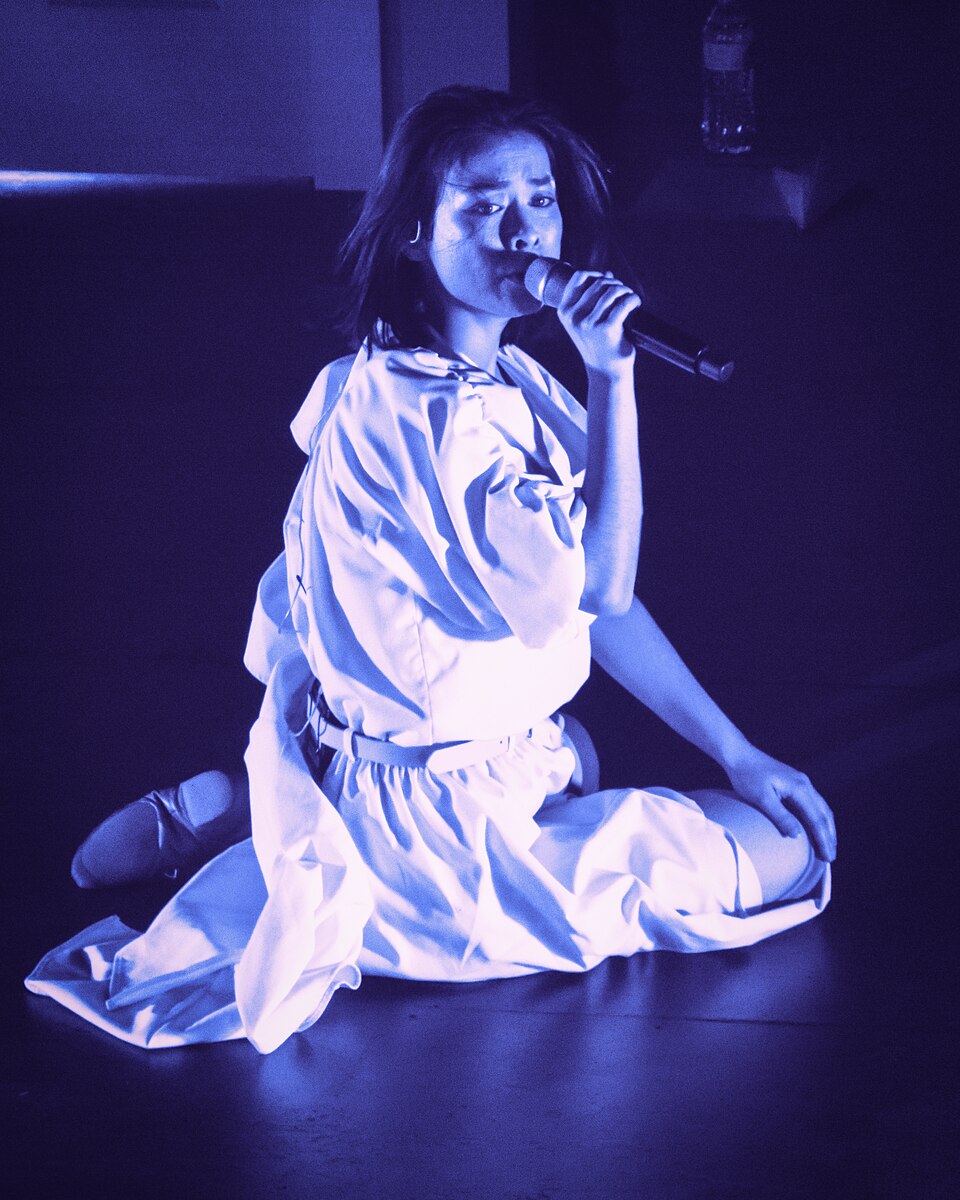
“In our concept, we combine the theme of nature vs the human element contained by the artist in the music with the Japanese concept of inemuri (a short nap taken in a public place). We are interested in a consideration of human presence in a world that emanates constant development, momentum and movement–symbolized by a large, multi-layered city.
We look at the parallel stories of five characters–people from different walks of life: an office worker, a street mime, a woman from high society, a normal girl, and a young boy. In each case, we begin the cinematic observation from their nap in a public place. Their visual structures and the pulse of the city constitute the background for the choreographic exploration of sleep–a state that seemingly seems impossible to interpret in this way, being perceived as motionless. Building a palette of actions, we try to look for things stretched between suspension and momentum, pause and movement, between sleep and reality.”
Watch the “Core” Video:

Song of the Night Mists–the last in a trilogy, following LPs Liebestod (2013) and Rite of the End (2017)– was recorded primarily by Wesołowski in two locations: his Gdańsk, Poland studio and in Saint Nicholas’ Basilica in Amsterdam. The LP tracks incorporate acoustic instruments (piano, organ, violin, double bass) and classic synthesizers, such as the Roland Jupiter-8, a Roland Space Echo RE-150 tape delay, and the Soviet Polivoks. We also hear the basilica’s organ and field recordings from the Tatra Mountains located on the border of Slovakia and Poland. Other musicians were Maja Miro, who played the flute parts on “Glacial Troughs” and his brother Piotr Wesołowski, who played the organ on “Wilhelm Tombeau.” The LP was engineered by Marcin Nenko, who was on hand to record the basilica organ, mixed in New York by Al Carlson (Oneohtrix Point Never, Jessica Pratt, Zola Jesus, and Liturgy), and mastered by Rafael Anton Irisarri.
Another set of samples made by Wesołowski play another role. These are field recordings, originally created for an audio illustration of the formation of the Tatra Mountains, and used in a film by sound designer Michał Fojcik. “You can hear cracking ice, streams, footsteps in the snow and the wind, and a real avalanche, recorded from the inside,” Wesołowski says. The “Tatra connection” on the album is also found in samples referencing composer Karol Szymanowski. The album’s title alludes to a poem about the mountains by Polish poet, Kazimierz Przerwa-Tetmajer.
Get Song of the Night Mists:
Wesołowski’s Tatra recordings are “about a world without humans – about the fact that the world existed, was beautiful, and had meaning long before people arrived, and for the vast majority of its history, it was a place without us.” Wesołowski, using one iteration of the natural world, plays out in sound Sebald’s idea of another order, underlying the chaos of human relationships lying beyond human comprehension.
This is a dramatic album, but it does feel a strangely short, or curtailed listen on ending, evoking the feeling one gets when waking from a dream, and, for all its incipient grandeur, a track like “Stalagmite,” for instance, ends on a minor note. Wesołowski admits that Song of the Night Mists is born of the all too human process of temptation, doubt and recalibration–Sebaldian overlaps and coincidences forming something that must live another life, away from its creator. In Wesołowski’s words, the album is “a newborn foal must stand up and walk right after birth.” Now it is yours to ponder.


Comments 0
No Readers' Pick yet.