




Gorillaz Find a New Peak on ‘The Mountain’

 Story by:
Chris Guest
Story by:
Chris Guest
The Mountain, the ninth album from Damon Albarn and Jamie Hewlett’s virtual band Gorillaz, represents perhaps the finest distillation yet of the sound that Albarn and Hewlett have long been searching for throughout the entire history of Gorillaz as a concept. That distillation leads to one of the most eclectic, entertaining, and energetic albums in the group’s 25-year history.
Where early albums from the group looked to provide a kaleidoscopic vision of hip-hop and pop music via cartoon characters and an endless guest musician list, The Mountain fascinatingly melds elements from various music cultures from around the world with the standard Gorillaz sound—fat beats, idiosyncratic instrumental textures, and one-of-a-kind melodies courtesy of mastermind Damon Albarn—into a stunningly original document, and a ringing success for the outfit.

On The Mountain: Background and Themes
The Mountain feels different from a lot of Gorillaz albums in that it actually plays like a full statement (or a concept album) instead of just a collection of memorable songs with notable collaborators. Damon Albarn had been talking for years about this being a bold new direction for the project, and you can hear that in the finished album. Travel, loss, and a profound sense of spiritual curiosity all shape this record in a way that feels meaningful this far into the group’s career.
Hewlett also claimed in a Rolling Stone interview that listeners are “supposed to listen to it from beginning to end,” saying they were “trying to bring back that idea of taking time to invest in something, instead of this culture of scrolling,” and that adds up. The Mountain is not one of those Gorillaz albums that feels best when you cherry-pick a few songs. It feels designed to unfold as a complete piece.
A lot of that direction came from their time spent in India, which clearly left its mark on the album’s sound and atmosphere. The title itself was partly inspired by Albarn and Jamie Hewlett’s visit to Amber Fort in Jaipur, while the image of the mountain also connected back to an earlier trip in western China.
That matters because The Mountain does not sound like Gorillaz randomly pulling influences from all over the place just because they can. It sounds like an album built from places, experiences, and ideas that truly meant something to the people making it – Albarn foremost but also his collaborators and myriad co-writers and guest musicians.

More than anything, though, this is an album shaped by grief. Albarn and Hewlett both experienced the deaths of close family members before and during its creation, and that sense of loss hangs over the record from start to finish. The remarkable thing is that it never turns the album into a gloom-laden slog. The Mountain is clearly interested in death, memory, and what might come after, but it still feels lively, strange, and full of motion. That tension is a big part of what makes the album work so well.
It also helps explain one of the album’s most striking choices. Albarn used unused or alternate vocal takes from several late collaborators, including soul legend Bobby Womack, rapper David Jolicoeur (aka Trugoy the Dove of De La Soul), actor Dennis Hopper, rapper Proof of D12, post-punk legend Mark E. Smith of The Fall, and drummer Tony Allen. On paper, the additions of departed legends as featured artists on this album could come across as a little gimmicky or even cheap.
However, the handling of their contributions is respectful and meaningful, as if the songs could not truly exist to their fullest potential without the voices or instruments that the departed contributors provided. The impact of those additions gives the entire project extra weight, and truly makes the album a potent and powerful rumination on the circle of life.
Song Highlights
These tracks best capture The Mountain’s sweeping ambition, emotional weight, and remarkable stylistic range.

“The Manifesto”
While this track might immediately sound like a jumbled mishmash of styles and sounds, it actually works extremely well within the flow of the album, and its placement as track eight on a 15-song album means it more or less represents the album’s centerpiece. With a dynamite verse from the late rapper Proof sandwiched between verses sung in Spanish by Latin hip-hop artist Trueno, this song represents the mission statement of The Mountain.

“The Happy Dictator”
This jaunty synth-pop ditty belies its sad messaging: “If you’re empty and abstracted and your broken heart is full of rage,” and it represents a soothing salve to the dark, turbulent reality that is life in 2026.

“Damascus”
An incredible track that sounds as if it was beamed from 40 years in the future to today with motoric hip-hop interludes courtesy of Yasiin Bey (formerly known as Mos Def) next to intricate Arabic verses from Syrian singer Omar Souleyman. Highly danceable.

“The Empty Dream Machine”
A delicate yet booming sound underscores one of the best melodies on the entire album on this expansive track, which boasts the guitar talents of The Smiths’ melodic guitar master Johnny Marr as well as swooping sitar flourishes courtesy of Anoushka Shankar, the daughter of sitar legend Ravi Shankar. Despite boasting a hypnotic drone-like backing, this song’s nearly six-minute runtime simply zooms by.

“The Plastic Guru”
Among the shortest tracks on the album, this catchy and beautiful work showcases the eminently melodic guitar talents of Johnny Marr once again, as his beautiful, forceful arpeggios underscore an incredibly memorable melody.

“The Sweet Prince”
Arguably the most beautiful song on the album, it also sounds the most like a “classic” Gorillaz song (a la Plastic Beach’s “On Melancholy Hill,” for instance), in that it features no unusual genre excursions and simply sees Damon Albarn singing defeatedly against a twinkling synth-pop and sitar backdrop with fluttering flute flourishes from Indian classical flautist Ajay Prasanna. A wistful, stunning masterpiece.

“The Sad God”
A fitting way to end the album, this track boasts a 1950s doo-wop-style melody, which also happens to be among the sweetest on the entire album. Ruminative and pleasant, this song feels as if you’re drifting into oblivion, surrounded by your closest friends and family—ready to see what comes next.
A Worthy Climb
In a storied career based on what was likely first created as something of a novelty, Gorillaz have continued to produce incredible work well into their third decade of existence.
While there have been ups and downs in the group’s discography, The Mountain is the first album from the group with no affiliation to the record company Parlophone (The Beatles’ and Radiohead’s original record label), as Albarn and Hewlett released it through their own label, Kong.
Perhaps that artistic freedom gave them the confidence required to include voices of late collaborators, as well as songs sung in multiple languages including English, Arabic, Hindi, Spanish, and Yoruba.
The Mountain is a towering achievement, and one that will surely age well over the course of the rest of Gorillaz’s (hopefully) lengthy recording career.
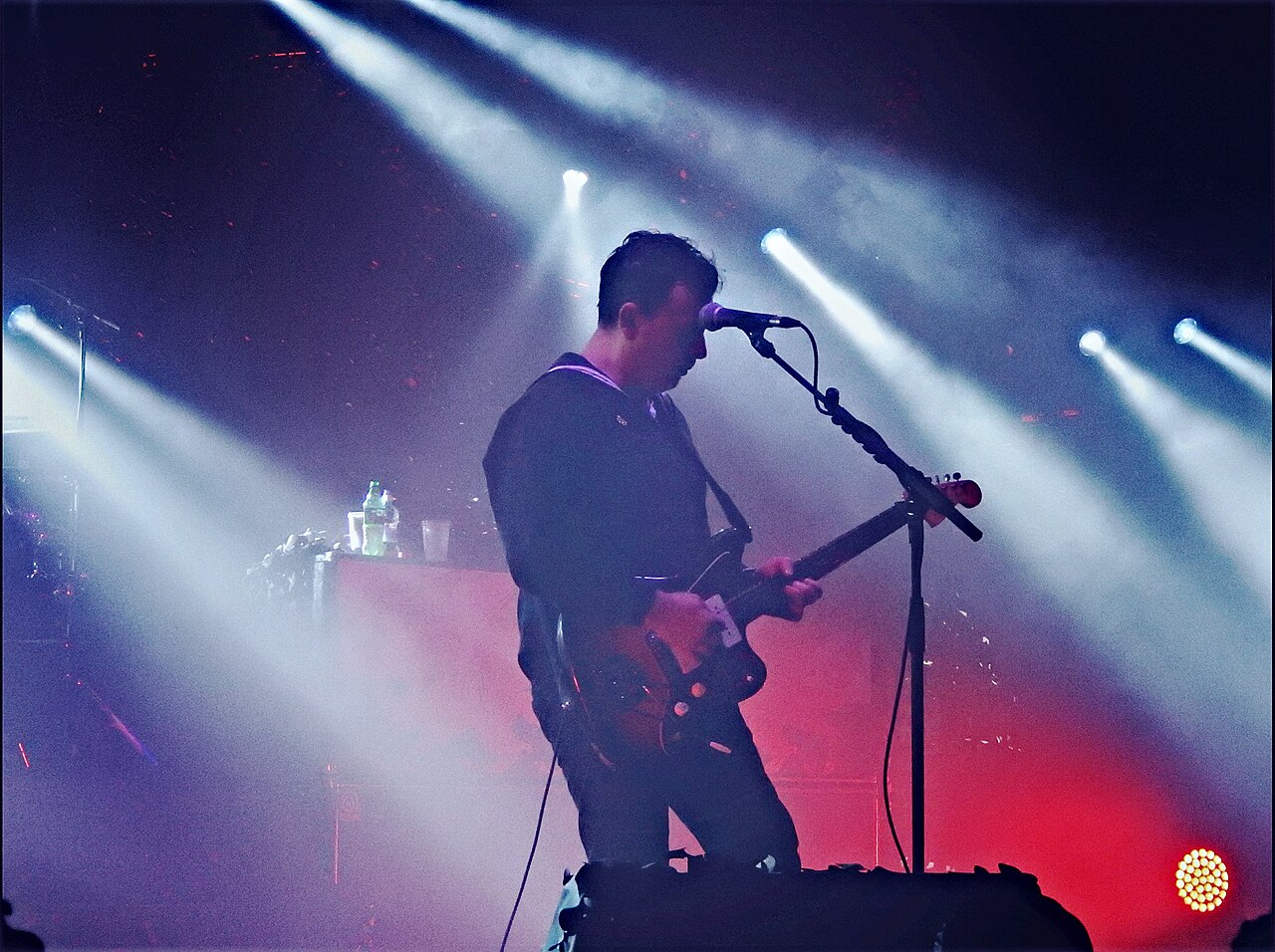
Header Photo Courtesy Drew de F Fawkes/Wikimedia Commons


Comments 0
No Readers' Pick yet.