







Sly Stone Dies at 82: Family Stone Founder Revolutionized Soul & Funk Music
Sly Stone, the pioneering funk icon who broke racial barriers with Sly & the Family Stone, has died at age 82.
 Story by:
Editorial Dept.
Story by:
Editorial Dept.
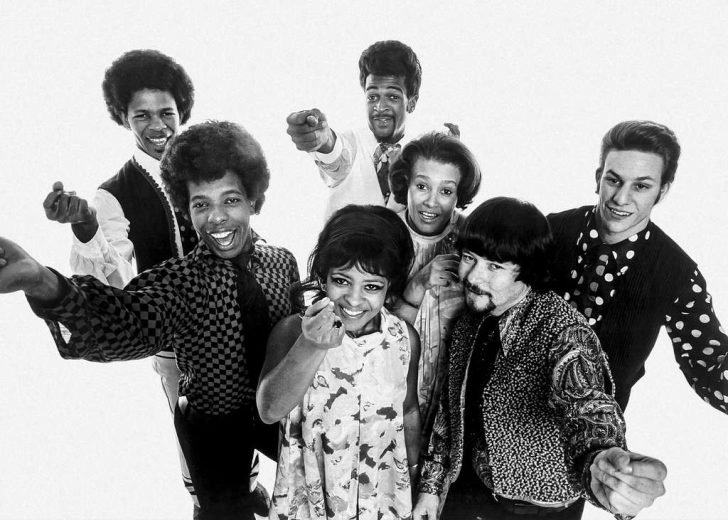
When Sylvester Stewart, aka Sly Stone, died on June 9, 2025 at age 82, the world lost more than a musician—it lost a prophet. The man who declared “different strokes for different folks” didn’t just create songs; he created possibilities. In an America torn apart by racial tension, Sly Stone had the audacity to put a Black man, white woman, Asian drummer, and mixed-race bassist on the same stage and call it a family.
That revolutionary lineup of Sly and the Family Stone wasn’t just progressive—it was dangerous. This was 1967, when being in an interracial band could get you killed in certain parts of America. The Black Panthers threatened him for keeping white members; conservative venues banned them outright. Sly’s response was characteristically defiant: he pumped up the volume and played louder.
Larry Graham’s slap bass technique didn’t just create funk; it rewired DNA. Those percussive pops and slithery slaps became the blueprint for everything from disco to hip-hop. When you hear “Thank You (Falettinme Be Mice Elf Agin),” you’re hearing the future being born.
Sly was a studio innovator before anyone knew what that meant. “Family Affair” featured one of the first drum machine hits—the Maestro Rhythm King providing that hypnotic pulse that would define countless hip-hop tracks decades later.

Sly and the Family Stone’s Woodstock performance at 3:30 AM on August 17, 1969 remains legendary. Half a million people, bone-tired and mud-caked, suddenly erupted when Sly commanded them to get “Higher!” It wasn’t just a song—it was proof that music could transcend every barrier.
There’s a Riot Goin’ On‘s release in 1971 marked both a creative peak and personal nadir for Sly. Recorded largely solo, the album was dark and challenging—a far cry from the exuberant optimism of Stand! Yet it produced “Family Affair,” with that stuttering drum machine and intimate vocals about dysfunction all wrapped inside an irresistible groove.
By 1970, Sly was deep into cocaine and PCP, canceling shows, retreating into isolation. What followed were the lost decades—years of legal troubles, homelessness, and virtual silence. Rumors of his death circulated regularly.
Yet his influence only grew. Hip-hop producers sampled his catalog relentlessly frequently—with over 800 documented samples from artists ranging from LL Cool J to Dr. Dre. Miles Davis called him “my only peer.”
Sly’s final years brought peace. His daughter reported he’d been clean for six years, living quietly, working on a screenplay about his life.
Upon his passing, Questlove’s tribute was particularly moving: “Sly was a giant—not just for his groundbreaking work with the Family Stone, but for the radical inclusivity and deep human truths he poured into every note.”
Music critic Joel Selvin wrote: “There are two types of black music: black music before Sly Stone, and black music after Sly Stone.” It’s not hyperbole—it’s simply taxonomy.

Sly Stone’s genius wasn’t just musical; it was social. He proved that integration wasn’t just possible but powerful; that funk could be both revolutionary and joyful. “Everyday People” wasn’t just a hit—it was a manifesto.
“Different strokes for different folks”—the phrase Muhammad Ali coined but Sly brought into the public consciousness—has become embedded in American vernacular (even becoming the name of a sitcom in the late 1970s), but we forget its radical origins. It was a Black musician in 1968 telling America that diversity wasn’t just tolerable—it was essential, beautiful, and funky.
As we mourn Sly Stone’s passing, let’s remember his greatest creation: the idea that music could make the impossible feel inevitable. That a mixed-race band could take the stage when such integration was illegal in parts of America. That the revolution, when it finally comes, might just be something you can dance to.
Thank you, Sly. Different strokes for different folks, indeed—but your stroke painted the future in colors we’re still learning to see.





Comments 0
No Readers' Pick yet.