








From Guyker Tuners to Bass Bridges: Guitar Parts Worth Obsessing Over
From late-night tone quests to gearhead mods, this deep dive uncovers why serious players swear by upgrades like Guyker tuners and brass bridges.
 Story by:
Music Blog
Story by:
Music Blog
Face it, once you get hooked on the guitar, it is a taken deal. Of course, it is so easy in the beginning. Some chords, perhaps a campfire jam. But the deeper you fall into music, the more it consumes your attention. Before long, you’re on music forums at 2 a.m., debating the tonal character of spruce versus mahogany, obsessing over pickup height, or sharing pedalboard setups like you’re engineering a six-string spaceship.
It’s not just about playing anymore—it becomes a full-on immersion into sound, gear, and expression, where every detail shapes the music you make and the identity you craft as a musician. Well, then you are not alone, and you are part of the club.
The fact is that guitars are not merely instruments; they are complex machines with moving parts (and components that modify tone). And you gigging musicians, weekend warriors, or straight gear junkies, knowing what all of these parts are and how they can be upgraded is one of the most rewarding holes you can go down.
We want to focus on the things that matter: the guitar parts that it is worth getting all obsessive over, these being Guyker tuners, bass bridges, tone-hacking mods, or anything in between.
The Big Three: Body, Neck, and Hardware
We are going to start with the basics of the guitar.
The Body The Tone Stops Here
You can consider the guitar body here as the soul of your instrument. The first point is where the tone is developed and also the bit that people are most likely to be obsessive about (and rightly so). Solid-body? Semi-hollow? Chambered? These all make a difference concerning satellite and sustain, and the way you react.
The tonewood is another issue as well, although it is still argued on the internet. Mahogany will provide you with the bite and the bass sustain, alder and ash will provide you with a balanced voice with the high snappy, and basswood will have a lightweight and creamier touch. However, when you are pursuing a certain tone, the body is only a part of the equation.
Hardware Mods That Count
It is the part where it becomes juicy. Stock guitars are awesome, and that instrument is where your finger wants to touch the hardware, and that is where you can make your tone, your feel, your performance, and Guyker has become one of the names in the guitar nerd world.
Guyker Tuners: The Unsung Heroes of Tuning Stability
Do you still have stock tuners that slip, clatter, or grind shut? This is high time to replace it. Guyker tuners are renowned for being precise, smooth, and deadly cool (i.e., locking tuners that make string changes a walk in the park). Bringing up the Tele-type axe, a Les Paul guitar, or even a bass, Guyker will have the tuners to hold your tuning rock-solid and, at the same time, to look good doing it.
Tuners with locks, especially, are a game-changer. The reason is that they clamp the string down, which minimizes slack, and your strings are much less likely to drift in the middle of a set. You will have the experience of spending less time tuning your instrument and more time playing. Frankly speaking, your guitar will seem like a machine with high performance.
Bass Tuners & Bridges: Designed with Low-End Power:
As a bassist (or modder), the tuners on your bass and the bridge hardware used can make drastic changes to the clarity, sustain, and stability of tuning. Crappy tuners may cause your E-string to feel like wet spaghetti, the good stuff (such as that available by Guyker or Hipshot) will tighten everything right up. As the tuning machines get better, there is better precision and less number of tuning issues when digging in or shifting tunings.
Brass bridges? Worth your attention. As a key contact point between strings and body, the bridge transmits string vibration with precision, and high-quality materials like brass can dramatically enhance your tone. As if you’re laying down some slick funk slaps, weaving through jazzy walking lines, or riding heavy, doom-laden riffs, a well-constructed bridge offers improved sustain, tighter low-end, and an overall more responsive playing experience.
For musicians chasing tone clarity and dynamic feel, upgrading your bridge could be one of the most overlooked but rewarding changes. If you’re prepping for a studio session or planning to perform at one of the growing number of virtual events, the responsiveness and sustain that a quality bridge offers can make a noticeable difference. The right hardware doesn’t just fine-tune your sound—it elevates your presence in any setting, live or streamed.
Voice Of The Guitar
The exchange of pickups is comparable to giving your guitar a fresh pair of vocal cords. After something more colorful and assertive? Single coils are the way to go. Seeking downy creamy lead sounds? Humbuckers translate into your friend. Getting your hands dirty on dirt blues? P90s will chorus at yuh. And a rabbit hole of boutique builders, ways of wiring, and types of magnets (ceramic or alnico, anyone?).
However, there is one certainty that this is one of the most satisfying upgrades regarding your sound. Together with quality pots, a good capacitor, and a competent job in terms of wiring, you may reveal the potential of your new pickups. Huge pickups should not be choked by cheap electronics.
Bridges, Saddles and Nuts: Little Parts, Big Difference
This is where many players underestimate the amount of tone and tuning that is in the nuts and saddles. The nut ( that is on the top of your fretboard ) assists in stabilizing the spacing of the strings and tuning. Otherwise, you will always fight with buzz or tuning problems when you cut it wrong. Different materials sound different: bone, Tusq, brass, etc.
The Personality-Lifting Tweaks
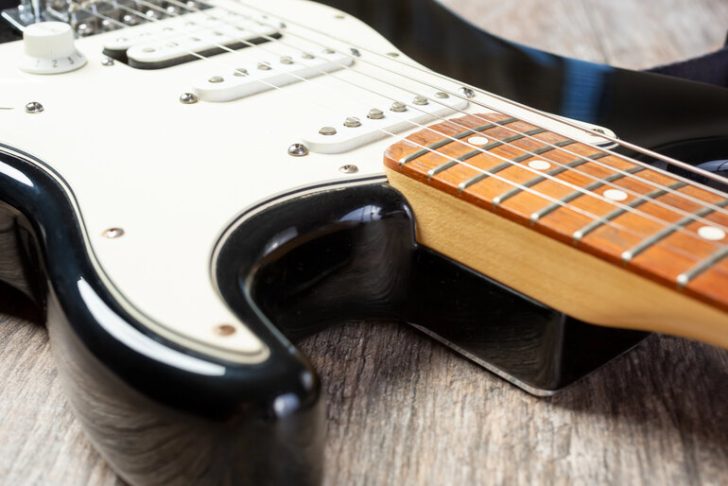
Not every mod is related to tone, but it does make a difference and gives it character. Switching guitar knobs and switching with metal knobs or vintage style may help your guitar sound more boutique.
- Pickguards- Pop looks at once. Tortoiseshell, anodized aluminum, or even personal prints might drastically alter the essence of your guitar.
- String Trees- They can be fitted on Strat-style headstocks to minimize the buzz produced by the strings or enhance tuneability when fitted with high-quality string trees.
- Strap Locks – They are not very glamorous, but if you do not wish your guitar to end up on the floor in the middle of one of your solos, you’d better use them. Here is a deal guitar must feel like your own. Nor is being a gear snob about mulling over the minutiae of a guitar. It is an indication of your caring.
Better Connectivity With Your Instrument.
As if it were Guyker tuners to make your life a breeze, or it was bass bridges that transform mud into thunder, the correct parts make it all. They assist you by not giving much attention to brainstorming your equipment, but concentrating on creating some music that counts. Therefore, go ahead. Tweak. Mod. Experiment.
There is even the option of removing the pickguard and interchanging a few screws. Set in that new bridge you have been looking at. Your guitar is a canvas, and the parts are what you learn to work with to be able to paint with sound.
Your turn—what guitar riff has you hooked right now? Maybe you’ve installed a fresh mod or picked up a Guyker component that’s changed your tone game. Drop your setup in the comments or tag us on socials—we’d love to hear it. Because in the end, it’s not about the gear or the tone. It’s about the community that celebrates the craft, the creativity that flows in late-night jam sessions, and that timeless feeling of losing yourself in the modern music you’re creating.


Comments 0
No Readers' Pick yet.